I wrote this out of a moment that has stayed with me and at the request of a friend.
A few years ago, during a winter show I participated in, I found myself surrounded by patrons, collectors, and other artists; the kind of room the art world prides itself on. Polished, civil. Self-congratulatory. When I looked around, I noticed there were maybe five Black people in the room total. Of those five, only two of us were artists on display. I was one of them.
Throughout the night, I received the usual range of comments, "your work is great," "this is powerful," "beautiful," and everything in between. But one comment cut through the noise because of how familiar it was. An older white woman approached while I was speaking with a young Black man about my work. She looked at one of the pieces (a portrait of an unmistakable Black woman) and said, "Oh my God, this piece looks exactly like you."
This comment was not new to me. It wasn’t surprising. It wasn’t the first time I had heard it, and it certainly won’t be the last. Anyone Black working professionally has encountered this kind of remark in one form or another. I’ve heard everything from “Is that a shiesty?” to “Is he wearing a mask?” to “Wow, you’re so well spoken,” “You’re so articulate,” “You’re so professional.” Compliments that masquerade as praise while quietly revealing the low expectations beneath them.
When these comments are directed at my art, they feel like a denial of my humanity, at best, a half‑baked acknowledgment of it. The work is not being engaged as intentional, researched, or conceptually rigorous. Instead, it is flattened into proximity: it looks like you, therefore it is you,
therefore it requires no further thought.
The Surreal Contract of Black Art
There is a surreal understanding that comes with being a Black artist: the art world does not value you, or your work, on the same terms as your white counterparts. It might be polite to say this is about taste or market trends, but honesty demands stronger language. The art world does not like Black artists unless they are willing to perform.
To carve out space, the Black artist is often asked, explicitly or implicitly, to enter a kind of circus. To dance. To perform with the monkey. To exaggerate pain, trauma, or stereotype just enough to be legible, but never enough to be disruptive. And even when space is granted, it is conditional. Within it live classism, colorism, respectability politics, and aesthetic policing. Black art is expected to fit inside a narrow box curated by institutions that insist on defining what Blackness should look like.
But there is no monolith of Blackness. The only universal experience of being Black is being Black. Everything else: class, region, language, softness, rage, surrealism, silence, complicates that narrative in ways the art world often finds inconvenient.
Vulnerability as a Trap
I once received a comment from a fellow artist that stuck with me: to be an artist is to be vulnerable, and to be vulnerable is to be seen. This is widely accepted as a truth of art-making. But for Black artists, vulnerability comes at a cost.
Black art often requires a degree of vulnerability that is deeply tied to historical and inherited trauma. Sharing that vulnerability can be retraumatizing, and worse, it is frequently devalued. I have been told, directly and indirectly, that my vulnerability was not the right kind. It’s too political. It’s not the right time. This isn’t what I imagined your work to be.
What does it mean to ask someone to be vulnerable, only to reject the vulnerability they offer?
This contradiction, this enigma, sits at the center of the Black artistic experience. Vulnerability is praised as a virtue, but only when it comes from white bodies. Their pain is universal. Their introspection is profound. Their trauma is brave. Meanwhile, Black vulnerability is treated as excessive, uncomfortable, or inconvenient.
To be vulnerable as a Black person exposes the fractures of American society. It reflects back the trauma passed down through generations by systems of power and oppression. It holds up a mirror to white society and asks it to look. And that act—being forced to look—is often met with resistance.
Masquerade Culture
Another artist once described the art world to me as a masquerade. The metaphor felt immediately true. A masquerade is about performance: wearing the right mask, speaking the right language, knowing the steps to the dance. It is about belonging through imitation.
But what happens when someone was never trained for the masquerade? What happens when someone refuses to wear the mask, or worse, removes it?
In those moments, the performance collapses. The presence of someone unwilling to conform exposes the fragility of the whole system. Taking off the mask becomes a crime. Holding up a
mirror becomes an act of aggression.
As a Black artist, you are often expected to perform gratitude, palatability, and legibility. But how do you do that when you have always been on the outside looking in? How do you perform joyfully in a space that has already stripped you of value? How do you dance when you are being watched not as a peer, but as an anomaly?
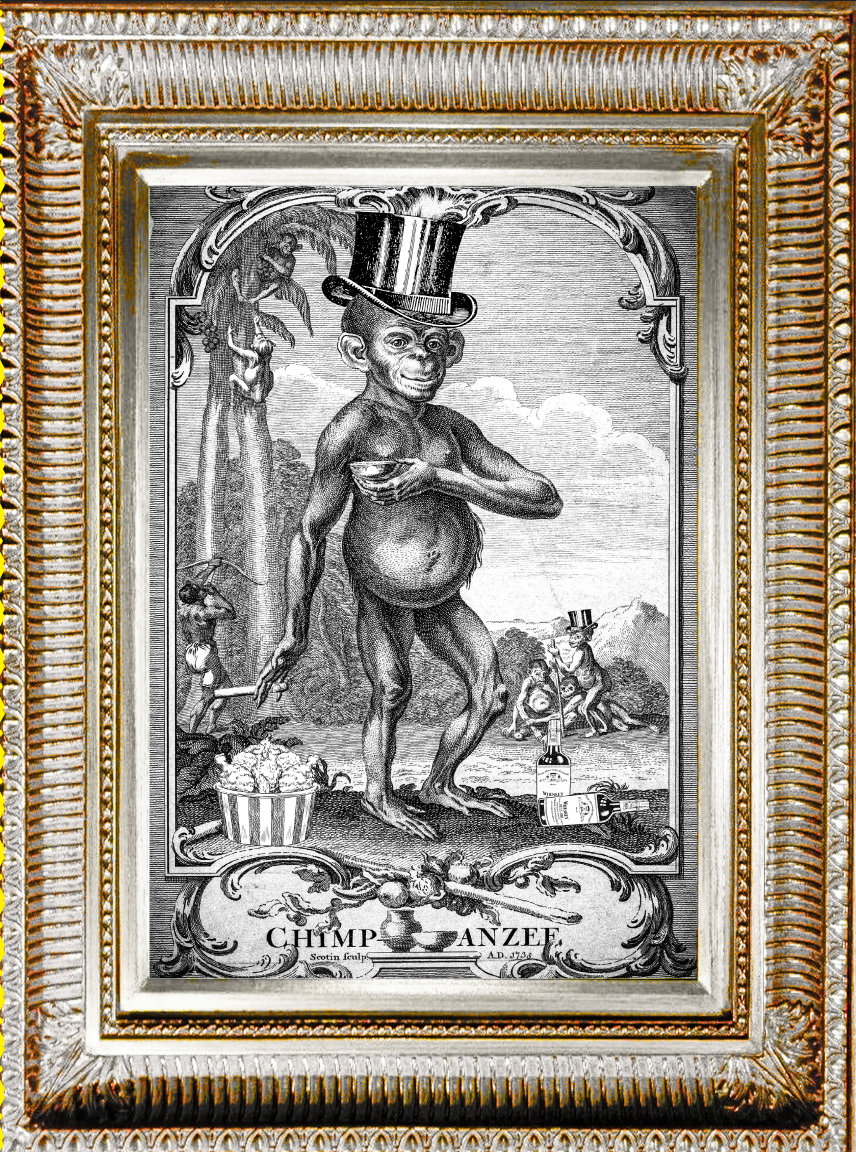
In many ways, the Black artist is treated like a monkey, expected to mimic, regurgitate, and perform a stereotype of Blackness that makes others comfortable. When you break that mold, confusion sets in. Again, When your work speaks honestly about Black history, pain, or complexity, it short-circuits expectations. It forces a confrontation many were never prepared to have.
The Game
In many ways, the art world is not just a masquerade, it is a game. A game with rules, characters, dice, and power-ups that are never evenly distributed. It is a game whether we choose to play or not.
The rules shift depending on region, institution, and proximity to power. I know this firsthand, having worked within the Southern art world; specifically the American Southeast, and more narrowly, North Carolina. This region has its own ecosystem: players, gatekeepers, patrons, and institutions. There are people who genuinely want to see Black art prosper. But often, that prosperity is only encouraged within strict limits.
There are also individuals who want to see Black art exist fully and honestly, without conditions. And then there are those who use the idea of Black art: its visibility, its urgency, its perceived cultural capital as a tool for their own relevance. This too is part of the game. It is disheartening, but it comes with the territory.
As artists, we participate in this game whether we enjoy it or not. Personally, I do not enjoy it. But participation is often the price of survival.
A friend of mine once put it plainly: as a Black artist, you are almost guaranteed a show in February—but for the rest of the year, you’re out of luck. That statement echoes countless experiences I have witnessed and lived.
Black History Month becomes a spectacle rather than an acknowledgment of an ever-present history. Blackness is celebrated briefly, then shelved. To confine Black art to one of the shortest months of the year is not recognition, it is containment. After February, Black artists are pushed aside, unless they make a disruption loud enough to demand attention.
This reality exposes a deeper issue: Black history is treated as an accessory to American history, rather than as something foundational to it. Visibility is granted temporarily, conditionally, and often without sustained support.
Of course, this landscape is changing. There are spaces ,often created by Black people and people of color, that exist to nurture, share, and sustain this work. But many of these spaces operate without meaningful support from the wider art world. And increasingly, they are under threat defunded, dismantled, or framed as harmful to a national identity still rooted in the false neutrality of white supremacy. In rejecting the mold, the work reflects something back that many were never prepared to recognize.
Devaluation as Denial of Humanity
This denial of Black vulnerability mirrors a broader societal pattern. When Black people are constantly corrected, dismissed, or treated as excess instead of essential, they are rendered invisible. And when Black humanity is denied, Black art follows.
This is not new. We see it in the way artists like Jean-Michel Basquiat are remembered. His work extracted from its political urgency, his Blackness sanitized, his lived experience reduced to aesthetic shorthand. His art is celebrated, but the conditions that shaped it are stripped away. Without that context, the work is both prized and devalued at the same time.
Black experience informs Black art. To remove it is to hollow the work out. To ignore it is to deny the artist’s humanity.
The Monkey Who Makes Art
To speak personally: being the monkey in this world, a monkey who makes art, is exhausting. I show up. I clip, powder, apply. I install work. I attend receptions. I speak to collectors and curators. And still, there is a constant denial: of my humanity, of my interior life, of my right to see myself fully reflected in my work.
That denial is painful because vulnerability, especially within fine art, is expected to be intellectualized. It must be analyzed, footnoted, cited. It must function as a source rather than an experience. Something to be observed rather than felt. Something deeply human is flattened, stripped of emotion, and processed until it is safe.
Art becomes a product long before it is allowed to remain a refuge.
And yet, art is often the only place where our most inner thoughts (those too complex or fragile for language) can exist. For Black artists, this space is never neutral. The monkey carries trauma. The monkey carries life experience far beyond his years. That weight breeds cynicism. Nihilism. Doubt.
There have been many moments when I questioned whether I should continue making art at all. Whether continuing was worth the cost. And every time, I return to the same truth: I am alive because I chose to make art. I chose to give my humanity a form, even as the art world repeatedly asked me to deny it.
That realization has shifted something in me. I no longer allow my value to be determined externally. Valuing oneself ,especially as a Black artist, is an act of resistance. Hope, in this context, feels irrational. But it is a necessary irrationality. A madness required to survive, to keep making, to keep playing a game that was never designed to be fair.
This game thrives on desperation.
When you don’t know the language of the masquerade, when you don’t know which mask to wear or how to dance correctly, it becomes easy to be taken advantage of. Opportunities appear, but they come with consequences. You are placed in a show, but on the most very back wall. Out of sight out of mind. You’re told, at least you’re included, even when your presence is barely acknowledged.
And this harm does not come exclusively from white institutions. It also comes from Black gatekeepers who have learned to survive by enforcing a narrow idea of what Blackness should look like. If you are too Black too honest, too raw, too reflective it becomes uncomfortable. It shines too bright a mirror on problems many would rather ignore.
This is the cruelty of the circus: knowing others would kill for the opportunities you’ve had, while simultaneously questioning whether being there is worth the cost of self-erasure.
I often ask myself if it is worth it. And I keep arriving at a reluctant yes.
Because art, in many ways, is a form of immortality. It is a way of being seen. Of being acknowledged. Of proving that you were here, that your life meant something. That desire to be seen drives desperation. It drives performance. It turns people into monkeys willing to dance in a cynical masquerade just to escape invisibility.
But I want to believe, despite everything, that visibility does not have to come at the cost of humanity.




Comments